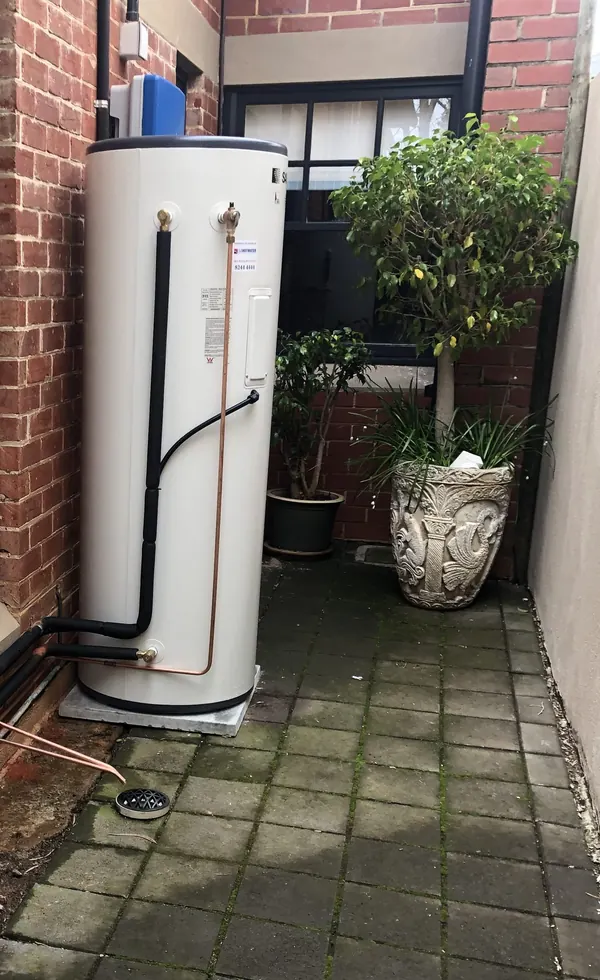
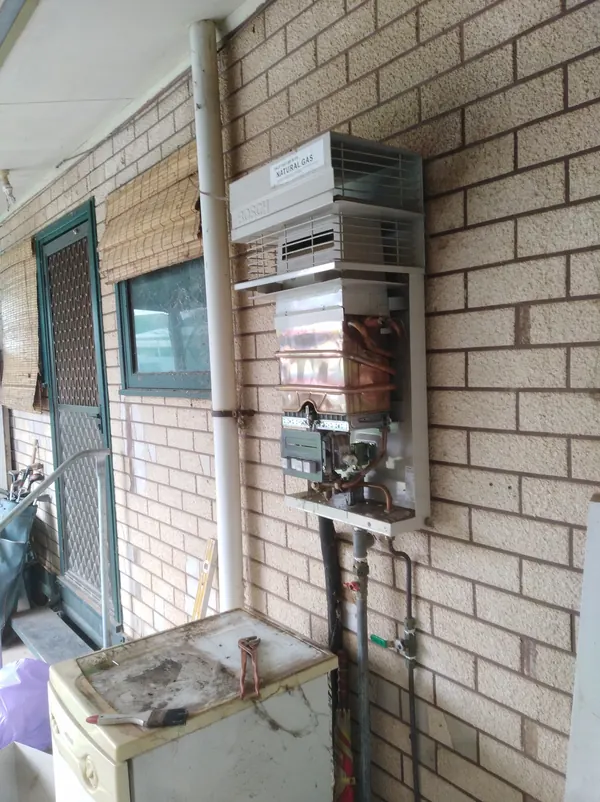
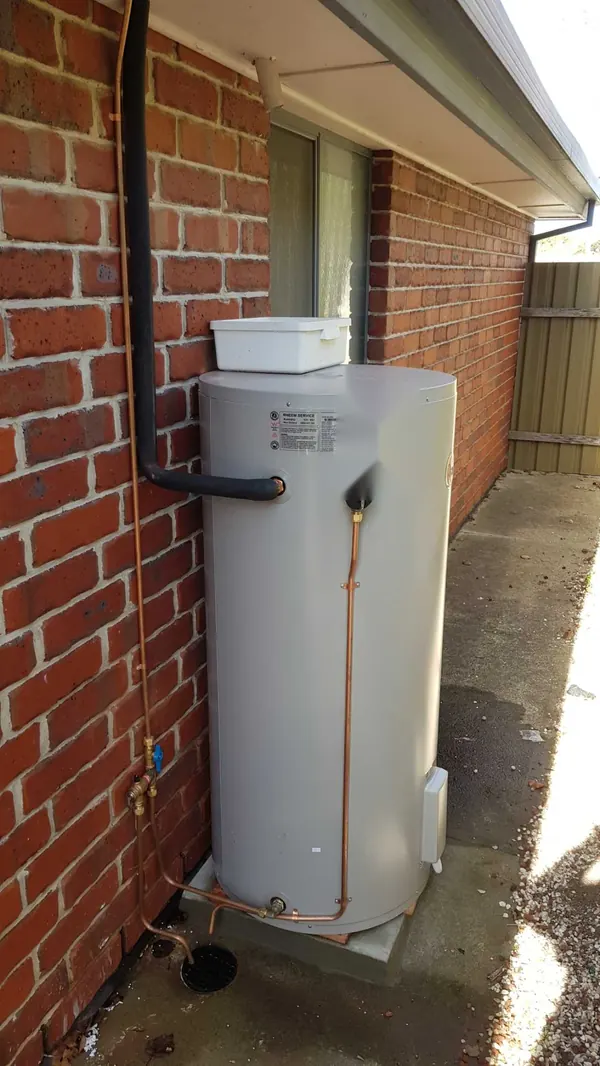
Continuous flow (instant) hot water heats water only while a tap is on, so it never runs out and there is no tank losing heat. A storage system keeps a tank of water hot, ready to go. For most Adelaide homes on mains gas, gas continuous flow is the more efficient gas option. A storage tank still suits some homes: big households that run several showers at once, homes without a big enough gas supply, and anyone pairing hot water with solar panels or a heat pump.
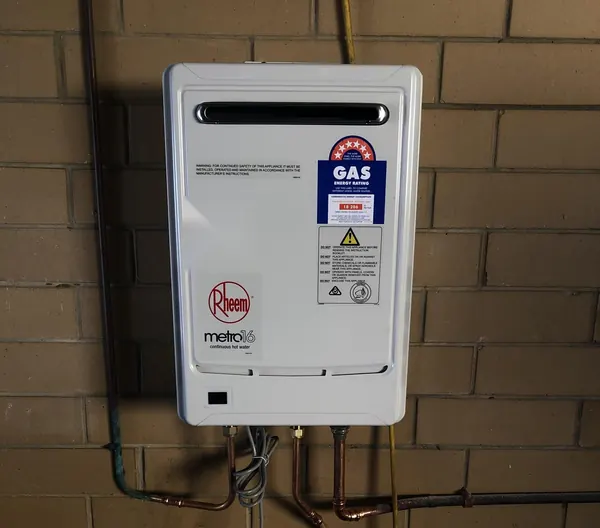
How each one works
Storage: water is heated and kept hot in an insulated tank, by an electric element, a gas burner, a heat pump or the sun. When you run a tap, hot water comes out of the tank and cold water refills it.
Continuous flow: there is no tank. When you turn on a hot tap, water flows through the unit, a gas burner (or a powerful electric element) fires, and the water is heated on the way through. When the tap goes off, so does the burner.
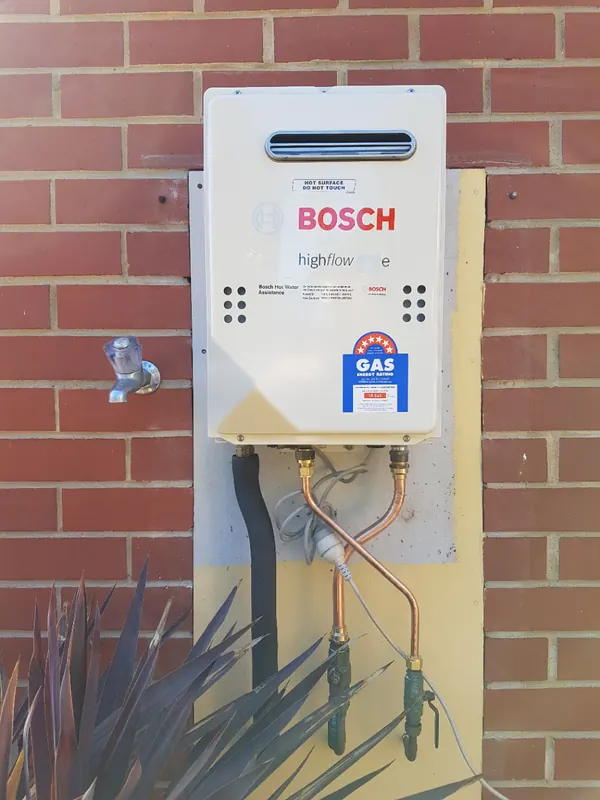
Side by side
| Continuous flow (gas) | Storage tank | |
|---|---|---|
| Runs out? | No, as long as the unit is big enough for the taps running at once | Yes, once the tank is used up it has to reheat |
| Space | Small unit on an outside wall | Needs room for the tank |
| Heat loss | Low: no tank to keep hot | Can be up to a third of the energy it uses |
| Needs power? | Most models need a power point | Electric and heat pump, yes; some gas tanks with a pilot don't |
| Gas supply | Needs a high gas flow; may need a bigger pipe or meter | Lower gas demand |
| Best for | Homes on mains gas that want endless hot water and less clutter | Heat pump and solar set-ups, off-peak power, big bursts of use |
Running costs
A storage tank is always holding hot water, and it loses heat through the tank, fittings and pipes. Your Home puts that at up to a third of the system's total energy use. Gas storage tanks are the worst for it, because the base of the tank can't be insulated where the burner sits. Continuous flow units don't have that standing loss, which is why gas continuous flow generally uses less energy than gas storage.
But storage is not always the dearer choice. A heat pump or solar system is a storage system, and those are usually the cheapest of all to run. So the fair comparison is gas continuous flow against a heat pump, not against an old gas tank. See heat pump vs gas vs electric: which is cheapest to run?
Sizing: litres per minute vs litres in the tank
Continuous flow units are sized by flow, in litres per minute: how much water they can heat at once. Most gas models for homes sit somewhere around 16 to 27 litres per minute. As a guide, Rinnai rates its Infinity 16 for a one bathroom home (two in warmer climates), and its Infinity 26 for one to two bathrooms (up to three in warmer climates), based on water-efficient taps and showers. A standard unit handles one or two outlets at a time; a high-output unit can run three or more.
Storage tanks are sized by volume. A common rule of thumb is about 50 litres of hot water per person per day. Gas tanks can be smaller than electric ones because they reheat faster, and off-peak electric tanks need to be bigger (over about 250 litres) to last between heating times.
Undersize either one and you will notice. We size it on your bathrooms and how your household uses hot water, so you don't pay for more than you need. More in our hot water FAQs.
Things that catch people out with continuous flow
- Gas supply. A continuous flow unit burns a lot of gas when it's running. Older homes sometimes need a bigger gas pipe, or a bigger meter, to keep up. We check this before we quote.
- Power. Most modern gas continuous flow units need a power point for their controls and fan, so they won't heat in a blackout. Some Bosch models use a pilot ignition instead.
- Low flow. The unit needs a minimum flow of water to fire. A tap barely open, a blocked inlet filter or some very low-flow fittings can cause the water to run cold.
- Electric instant units. Electric continuous flow units draw a lot of power and usually need a three-phase supply. Single-phase models only really suit a basin, not a shower.
- Temperature. Many continuous flow units can deliver water at a set, safe temperature (often 50°C), so there is no tank to keep at 60°C and less mixing needed. Your bathroom outlets must still be no hotter than 50°C.
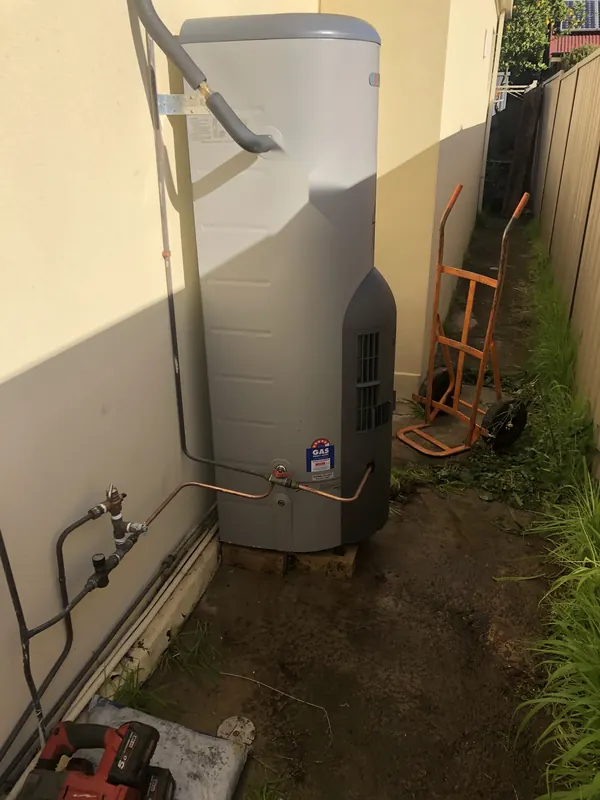
When storage makes more sense
- You want a heat pump or solar system, which always store water in a tank.
- You have rooftop solar and want to heat water in the middle of the day.
- Your home has no mains gas and a bottled gas set-up that can't supply a continuous flow unit.
- Your household runs lots of hot water at once, and upsizing the gas supply would cost more than it saves.
Swapping a tank for continuous flow
It's a common change, and it frees up the space the tank took. Before we quote we check:
- Your gas meter and pipe size can supply the unit at full flow
- Where the unit and its flue can go on an outside wall, and that there is a power point (or one can be added by an electrician)
- The flow rate you need for your bathrooms and kitchen
- What South Australia's rules allow. In homes on mains gas, a replacement gas water heater generally has to be rated 5 stars or more, and most gas continuous flow units are well above that.
A new or replaced system also needs a tempering valve, or a unit that controls the outlet temperature, so bathroom taps stay at 50°C or less.
Brands we supply and service
For continuous flow: Rinnai, Rheem, Bosch and Dux. For storage: Rheem, Vulcan, Dux and AquaMAX, plus Sanden, Reclaim and Midea heat pumps.
Want a straight answer for your house? Call (08) 8444 7311 or send us a photo of your current unit. We cover all of Adelaide, including Glenelg, Prospect, Port Adelaide and Golden Grove.
Common questions
Is continuous flow cheaper to run than a hot water tank?
Compared with a gas storage tank, usually yes, because there is no tank losing heat. A heat pump or solar system (which do use a tank) is usually cheaper to run than either.
What size continuous flow hot water system do I need?
It is sized in litres per minute. As a guide, about 16 litres per minute suits a one bathroom home and about 26 litres per minute suits one to two bathrooms, depending on your taps, showers and climate. We size it on your home.
Does a gas continuous flow system work in a blackout?
Most need a power point for their controls and fan, so they won't heat in a blackout. Some Bosch models use pilot ignition instead.
Can I replace my hot water tank with continuous flow?
Usually, yes. We check your gas meter and pipe size, where the unit and flue can go, the power point and the flow rate you need, plus what South Australia's rules allow, before we quote.