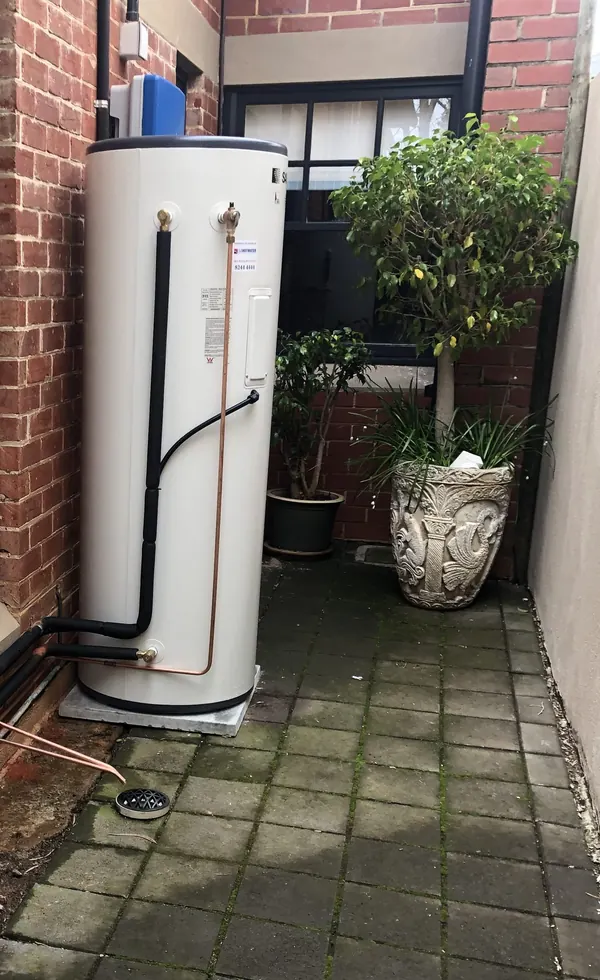
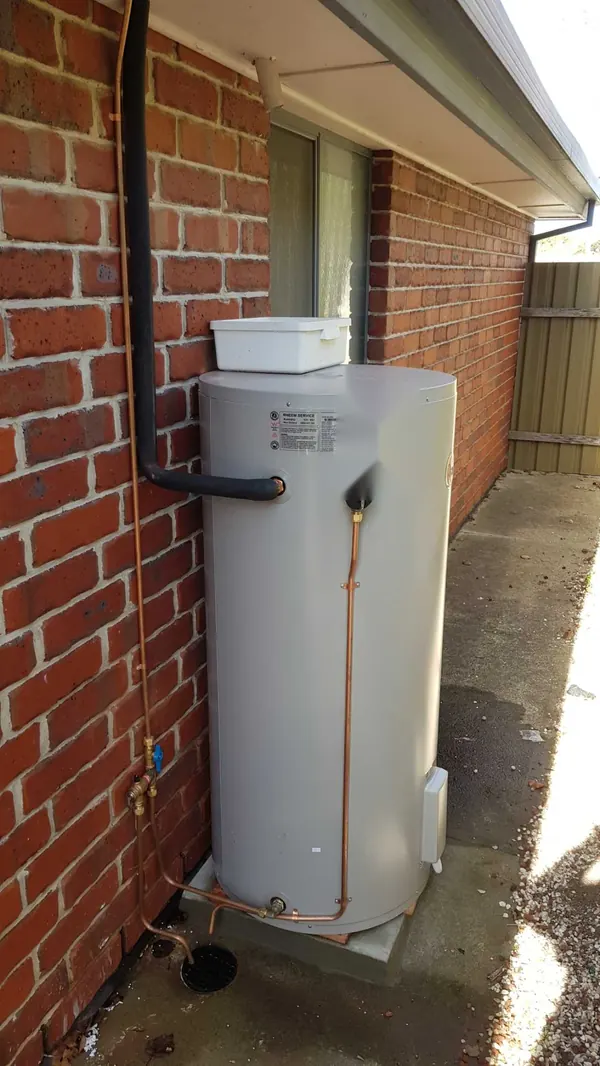
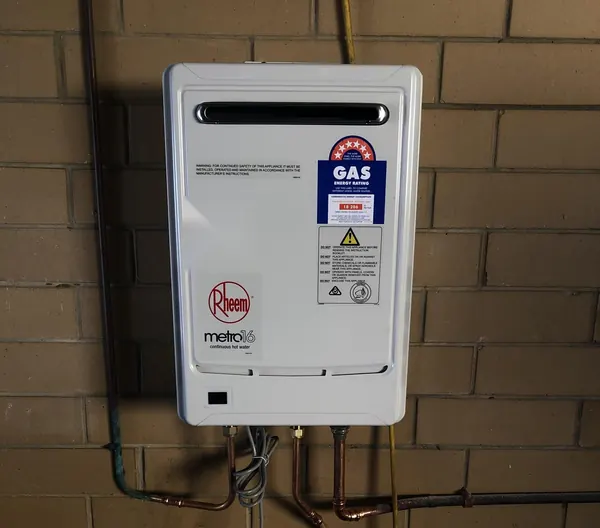
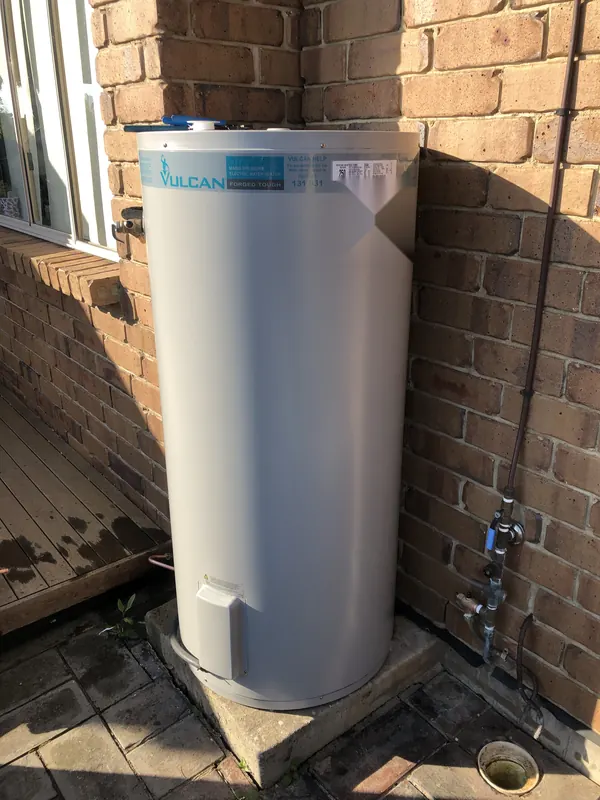
No hot water usually comes down to one of a few things: the power, the gas, the pilot light, a tank that has simply run out, or a part that has failed. The eight checks below are safe for anyone to do without opening the unit. If none of them fixes it, call us on (08) 8444 7311. If you can smell gas, skip straight to the safety box.
Smell gas? Stop here.
- Don't use light switches, phones or anything that could spark near the smell, and don't try to relight the pilot.
- Turn the gas off at the meter (or the bottles) if it is safe to do so, and open doors and windows.
- Move away, then call the 24 hour gas emergency line on 1800 427 532 for natural gas, or your gas supplier for bottled LPG. If anyone is in danger, call 000.
1. Is it only the hot water?
Turn on a cold tap. If no water comes out at all, the problem is your water supply, not the hot water system. Also check the cold water isolation valve on the pipe going into the unit is fully open (it may have been turned off for other work). Don't touch the brass relief valve near the top of the tank: that is a safety valve, not an on and off tap.
2. Check the switchboard
Electric tanks, heat pumps and most gas continuous flow units need power. Look in your switchboard for a tripped circuit breaker or safety switch, usually labelled "hot water" or "HWS". You can reset it once. If it trips again straight away, leave it off and call us. A breaker that keeps tripping can mean a failed element or water getting where it shouldn't, and that needs a licensed tradesperson.
3. Is there a power outage?
If other things in the house are off too, check the SA Power Networks outage map or call them on 13 13 66. Once the power is back, an electric tank or heat pump can take hours to reheat a full tank, so give it time before calling.
4. Has the tank just run out?
An off-peak electric tank only heats in its cheaper windows. On SA Power Networks' controlled load tariff that is overnight (11:30pm to 6:30am) and the middle of the day (9:30am to 4:30pm), though your retailer's times can differ. Visitors, extra showers or a long bath can empty the tank before the next window. If the water comes back hot after the next heating period but keeps running out, the tank may now be too small for the house, or the element or thermostat may be failing.
5. Is the gas on?
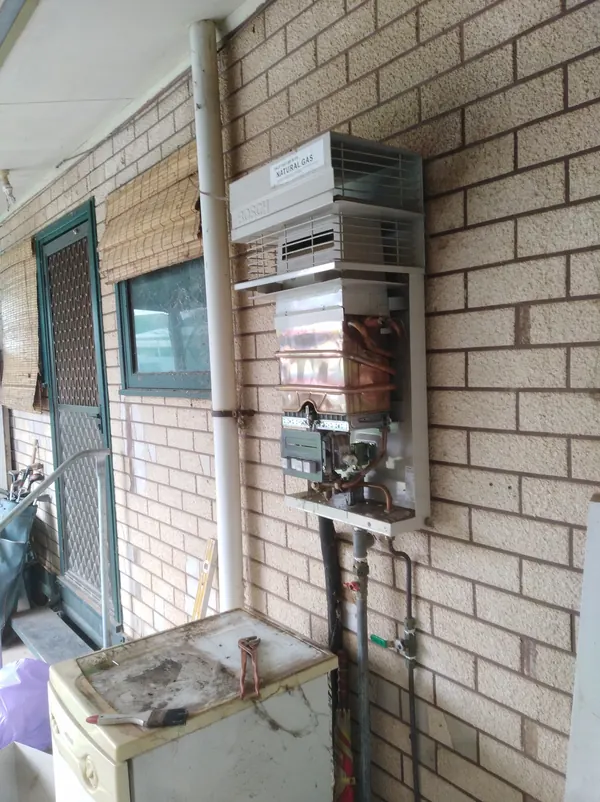
Try a gas burner on the cooktop. If no gas appliance works, there may be a supply problem in your area, or the gas may be turned off at the meter. On bottled LPG, the bottle in use may be empty: check the gauge or the changeover valve and switch to the full bottle.
6. Continuous flow unit? Look for an error code
Most continuous flow units, such as Rinnai, Rheem, Bosch and Dux, show a number on the kitchen or bathroom controller when something is wrong. Write the code down: it tells us a lot before we arrive. If you can't smell gas, you can try switching the unit off at its power point, waiting 30 to 60 seconds and switching it back on, then running a hot tap. If the code comes back, call us. Don't take the cover off the unit.
7. Gas storage tank? Check the pilot light
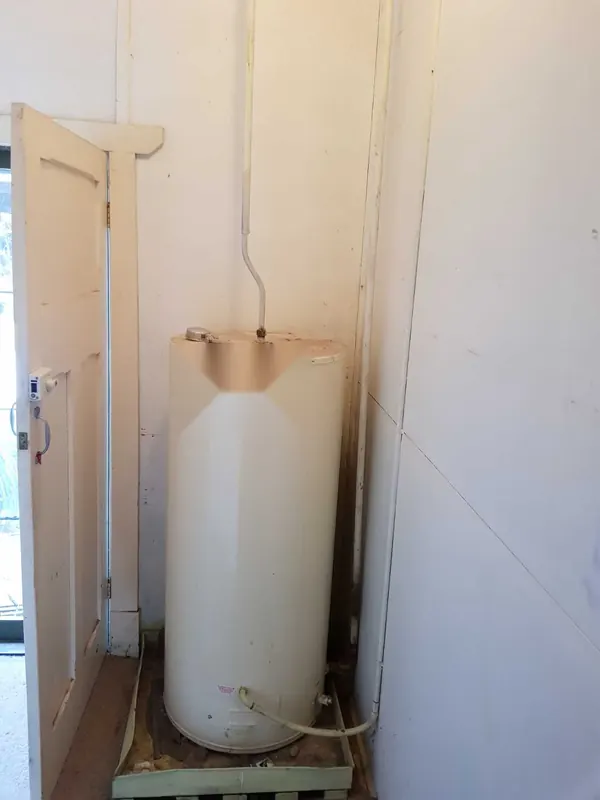
Many gas storage tanks have a small pilot flame, usually visible through a little window near the base. If it is out, you can relight it once by following the instructions printed on the unit, as long as you can't smell gas. If it won't light, or goes out again, stop and call us. A pilot that won't stay lit is usually a faulty thermocouple, a dirty pilot or a gas supply problem, and gas parts must be worked on by a licensed gas fitter.
8. Solar or heat pump? Check the booster and the settings
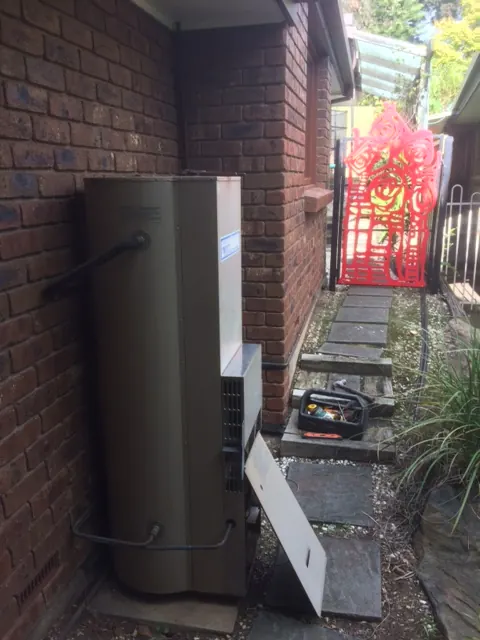
Solar systems rely on a gas or electric booster when the sun isn't enough, which is most of winter. If the booster has been switched off at the switchboard or isolator, you will get warm or cold water on dull days. Heat pumps take longer to heat on cold days, and many have a timer: check it hasn't been changed and the unit has power. If there is a fault light or error code, write it down and call us.
Water too cool, not cold?
Lukewarm water, or showers that swing between hot and cold, often point to the tempering valve. That is the valve that mixes hot and cold so bathroom taps stay at a safe 50°C or less. Tempering valves should be tested every 12 months and replaced when they wear out. It can also be an element, a thermostat, a solar booster setting or a gas burner problem. See trouble shooting for more.
Water leaking from the unit?
A small drip from the relief valve while the water heats up is normal. A steady flow, or water pooling under the tank, is not. Turn off the cold water isolation valve to the unit, keep away from any power points or electrics that are wet, and call us. Water coming from the tank itself usually means the tank has failed and needs replacing. Our guide on how long a hot water system lasts explains when a repair is worth it.
What not to do
- Don't remove covers or panels, or adjust gas controls, thermostats or valves inside the unit.
- Don't keep resetting a breaker that trips, or relight a pilot more than once.
- Don't work on gas or electrical parts yourself. In South Australia, water heaters must be worked on by a licensed plumber, and gas parts by a licensed gas fitter. DIY gas work is illegal and dangerous, and it can void your warranty.
What to tell us when you call
Have these handy and we can often tell you what's wrong on the phone, and bring the right parts:
- The brand and model, from the sticker plate on the side of the unit
- Roughly how old it is, and whether it is gas, electric, heat pump or solar
- What is happening: no hot water, lukewarm, leaking, noises, an error code
- A photo of the unit and its sticker plate (you can attach it to the form below)
We repair all makes, including Rheem, Rinnai, Bosch, Dux, AquaMAX, Vulcan and Sanden, with repairs or replacements within 24 hours where available, and same day for most customers. See hot water repairs, our gas safety page and emergency advice. Owner's manuals for many models are on our technical manuals page.
Common questions
Why do I suddenly have no hot water?
The most common causes are a tripped circuit breaker, a power or gas outage, an empty LPG bottle, a pilot light that has gone out, an off-peak tank that has run out, or a failed part such as an element, thermostat or gas control.
Can I reset my hot water system myself?
You can reset a tripped breaker once, and switch a continuous flow unit off and on at its power point if you can't smell gas. Don't open the unit or adjust gas or electrical parts. In SA, repairs must be done by a licensed plumber, and gas work by a licensed gas fitter.
What should I do if I smell gas near my hot water system?
Don't use switches or relight anything. Turn the gas off at the meter if it's safe, open doors and windows, move away and call the 24 hour gas emergency line on 1800 427 532 (natural gas) or your gas supplier for bottled LPG. Call 000 if anyone is in danger.
How fast can you fix no hot water?
We repair or replace hot water systems within 24 hours, where available, and most customers get same day service. A photo of the unit and its sticker plate helps us bring the right parts.