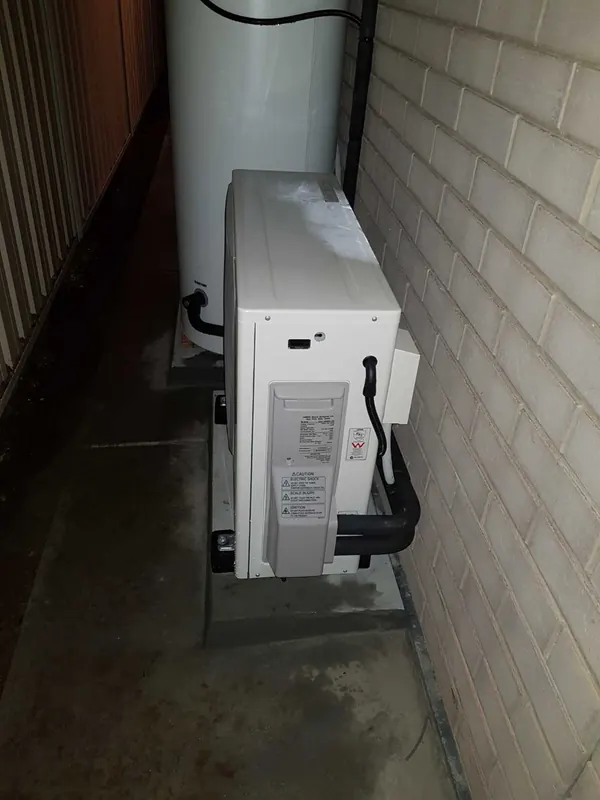
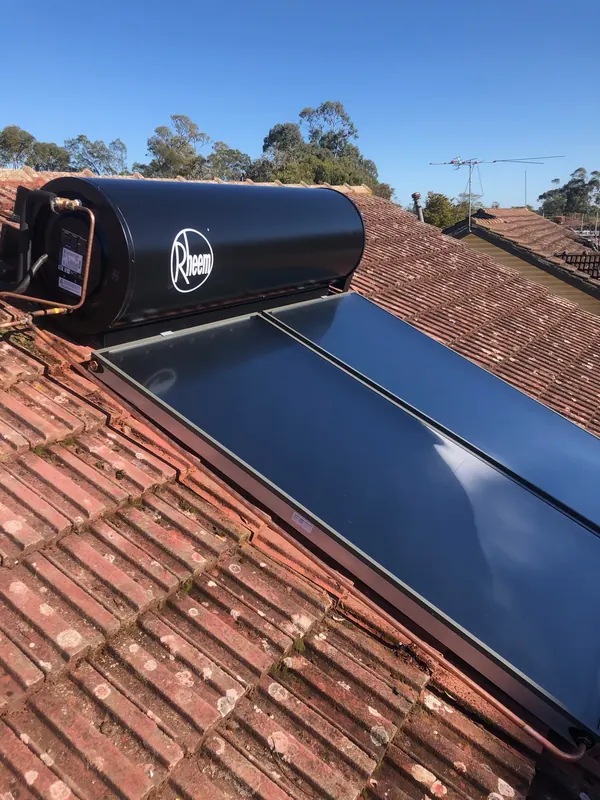
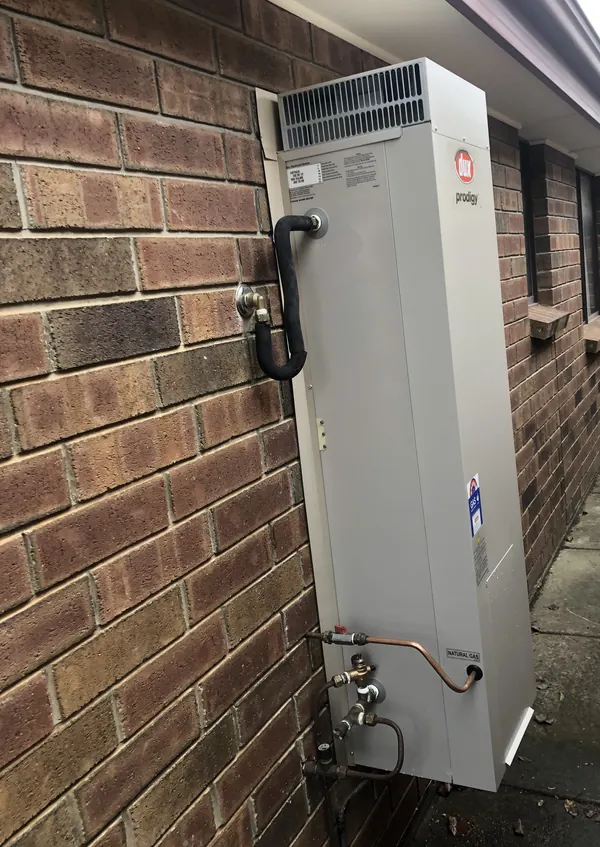
A storage hot water tank's relief valve is meant to let out a little water while the tank heats up. Water expands as it gets hot, and the valve releases the extra so the tank stays at a safe pressure. A small drip during heating is normal. A steady stream, a drip that never stops, or water pooling under the tank is not. If that is what you are seeing, call us on (08) 8444 7311.
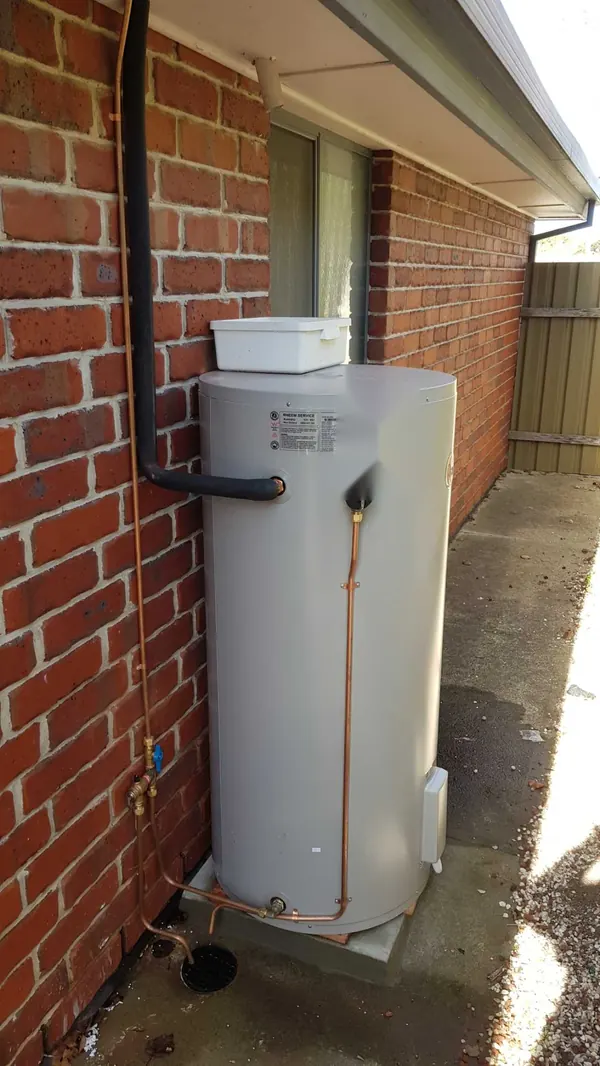
What the relief valve does
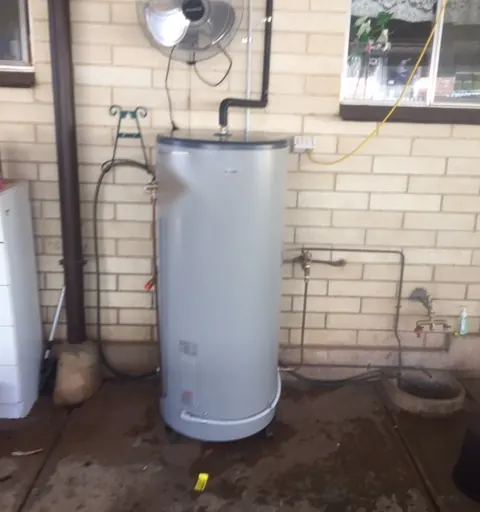
Every gas, electric, heat pump and solar storage tank has a temperature and pressure relief valve, usually called the relief valve or TPR valve. It is the brass valve near the top of the tank, roughly level with the hot water outlet, with a small lever and a drain pipe running down from it. Continuous flow units don't have one, because they don't store hot water.
The valve is a safety device. If the water in the tank ever got too hot or the pressure too high, it opens and lets water out through the drain line. That is why the drain line must never be blocked, capped or tied off, for any reason.
Why a little dripping is normal
When water is heated it expands by about one fiftieth of its volume. In a closed tank that extra water has to go somewhere, so the relief valve lets a small amount out through the drain line each time the tank heats. On an off-peak electric tank you may only notice it overnight or in the middle of the day. On a gas tank or heat pump it can happen whenever the water is reheating after showers.
Some homes also have an expansion control valve on the cold water pipe going into the tank. It can release a little water during heating for the same reason, which can take some of the load off the relief valve.
Signs the dripping is a problem
- It never stops. A drip or trickle that carries on long after the tank has finished heating.
- A steady stream. Water running from the drain line rather than the odd drop.
- Water or steam spurting out. Treat this as urgent and call us straight away.
- Nothing comes out when you test it. If you gently lift the lever and water doesn't flow freely, the valve may be stuck.
- Water pooling under the tank, or rust and stains on the tank itself. Water coming from the tank, not the valve, usually means the tank has failed.
What usually causes it
When we find a relief valve leaking more than it should, it is usually one of these:
- A worn valve. Relief valves wear out, and mineral deposits from the water build up on the seat so it can't close properly. Rheem recommends checking or replacing the valve at least every five years, and more often where the water leaves a lot of deposits.
- High mains water pressure. If the pressure coming into the house is high, the valve can open more often than it should. A pressure limiting valve on the cold supply is often part of the fix.
- A thermostat or control problem. If the water is getting hotter than it should, the valve will keep releasing. That needs a licensed tradesperson to test the thermostat, element or gas controls.
- A failing tank. Older tanks that are corroding inside can show up as leaks around the valve and fittings. If the tank itself is leaking it can't be repaired and needs replacing.
The six-monthly easing lever check
Rheem's owner guidance is to operate the easing lever on the relief valve gently once every six months. It helps stop the valve sticking:
- Gently lift the small lever on the valve, or gently pull the cord if your valve has one.
- Water should flow freely from the drain line. Hot water may come out, so keep your hands and face clear of the drain.
- Gently release the lever so it closes. Don't let it snap shut.
If water doesn't flow when you lift the lever, or the valve keeps running after you let go, call us. Don't try to adjust, tighten or replace the valve yourself. In South Australia, work on a water heater has to be done by a licensed plumber.
What to do while you wait for us
- If water is running steadily, turn off the cold water isolation valve on the pipe going into the hot water system. There should be one close to the unit.
- For an electric tank or heat pump that is leaking badly, switch the hot water off at the switchboard if it is safe to reach. Keep away from any wet power points or electrics.
- For a gas tank, follow the shut-down steps printed on the unit. If you can smell gas, follow our gas safety advice first.
- Take a photo of the unit and its sticker plate. It helps us bring the right valve and parts.
Repair or replace?
A leaking relief valve on its own is a routine repair, and we repair most brands where parts and technical data are available, including Rheem, Rinnai, Dux, Bosch, Vulcan and AquaMAX. If the tank is old, past its warranty or the leak is coming from the tank, a replacement usually makes more sense. Our guide on how long a hot water system lasts covers that choice, and if you do go ahead with a new system, the service fee comes off its price.
We work Monday to Friday across Adelaide, from Gawler to Morphett Vale and the Adelaide Hills. Call before 9am and same day is most likely. See our hot water repairs page or our no hot water checks for other problems.
Common questions
Is it normal for a hot water relief valve to drip?
Yes, a little. Water expands as it heats, and the relief valve lets a small amount out through the drain line during each heating period. A drip that never stops, or a steady stream, is not normal.
Why is my hot water relief valve leaking constantly?
Usually a worn valve, mineral deposits on the valve seat, high mains water pressure, or a thermostat or control fault that lets the water get too hot. We find the cause and recommend the most cost-effective repair.
How often should a relief valve be replaced?
Rheem recommends checking or replacing the temperature and pressure relief valve at least every five years, and more often where the water leaves a lot of deposits. Gently operate the easing lever every six months in between.
Can I block or cap the relief valve drain to stop the drip?
No, never. The relief valve and its drain line are safety devices. Blocking them can make the tank fail. Call us on (08) 8444 7311 instead.