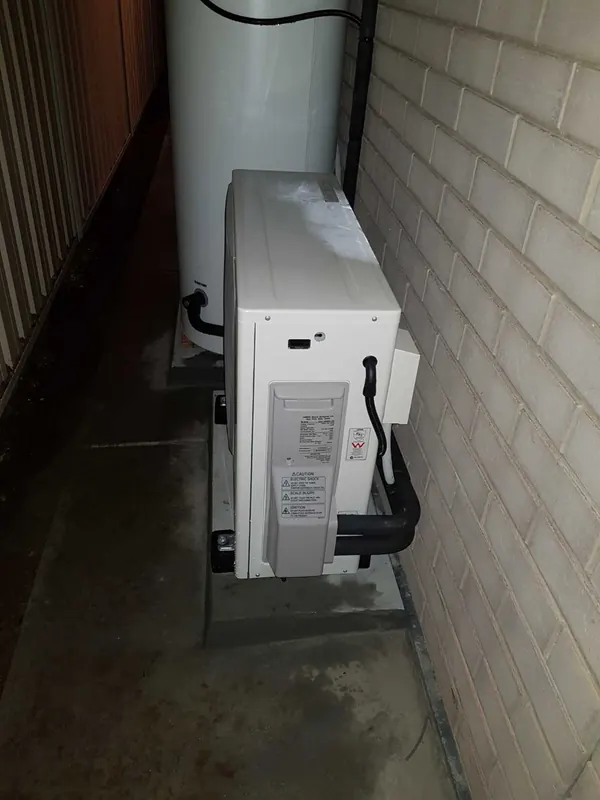
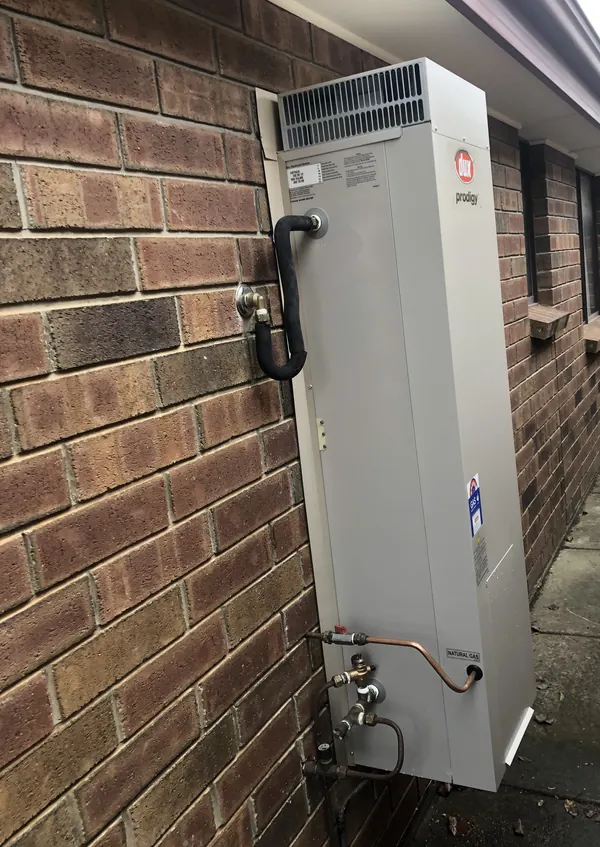
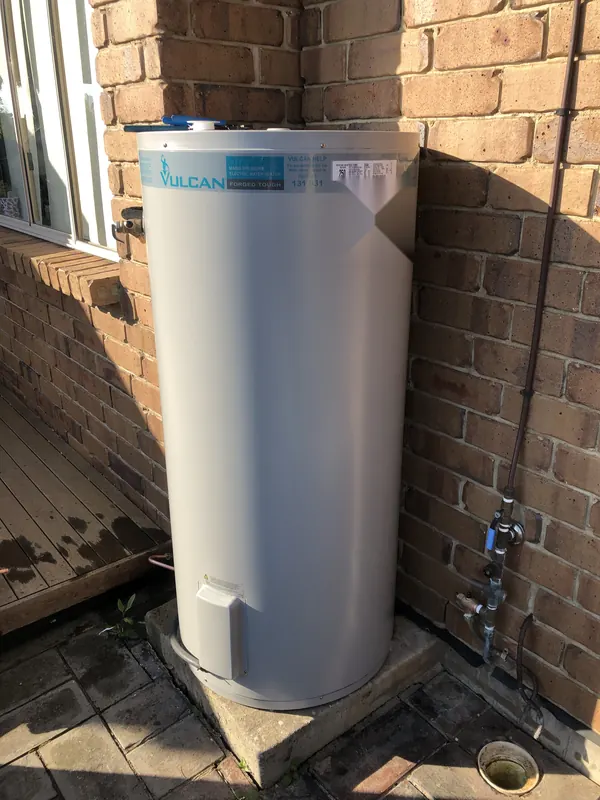
Solar hot water can still be worth it in Adelaide, especially for bigger households that use a lot of hot water and have a good north-facing roof. The sun can supply most of your hot water, with a gas or electric booster topping it up in winter. But it is no longer the automatic choice it was. If you already have rooftop solar panels, a heat pump is often simpler and cheaper to install, and it works day and night. Below we go through when each one makes sense. Questions about your own roof? Call (08) 8444 7311.
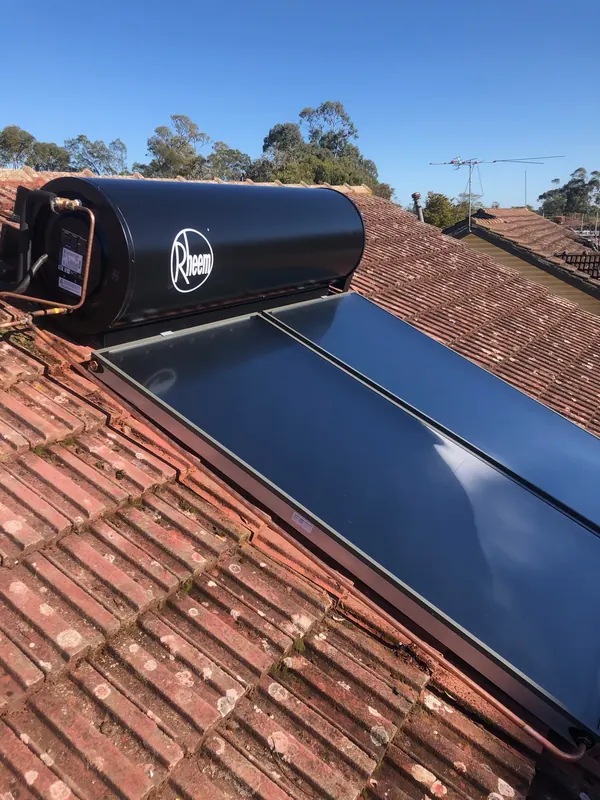
How solar hot water works
Solar collectors on the roof absorb the sun's heat and pass it to the water in a tank. There are two kinds of collector:
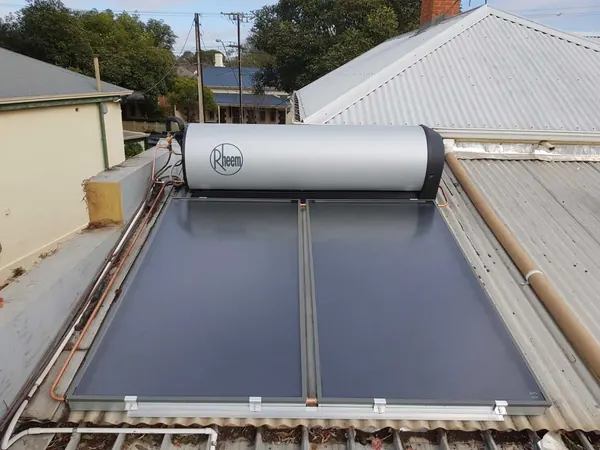
- Flat panels, the familiar dark glass panels. On some systems the tank sits on the roof above them; on split systems the tank is on the ground and a small pump circulates water to the roof.
- Evacuated tubes, a row of glass tubes that hold their heat well in cooler weather. Apricus evacuated tube systems are one we supply, with a 10 year tank warranty.
Every solar system has a booster, gas or electric, that heats the water when the sun can't keep up. Less solar heating in cloudy weather and in winter is normal, and the booster makes up the difference. Australian Government advice is that solar can provide up to 90% of a home's hot water, depending on the climate, and Adelaide's long sunny summers suit it well.
When solar hot water is still a good choice
- You use a lot of hot water. A big family with several showers a day gets the most out of free heat from the sun.
- You have a suitable roof. Collectors need roof space that gets plenty of sun through the day.
- You are on mains gas and want to stay that way. A gas-boosted solar system, such as a Rheem solar system, uses the sun first and gas only when needed, so you have hot water all year.
- Your current solar system is a good one. If the collectors are in good condition and compatible, sometimes we can keep them and just replace the tank.
When a heat pump is the better choice
A heat pump is also very efficient, but it takes heat from the air instead of the sun. For many Adelaide homes it now comes out ahead:
- You already have rooftop solar panels. Set a heat pump (or even an electric tank) to heat in the middle of the day and it runs mostly on your own solar power. You don't need a second set of collectors on the roof.
- Your roof doesn't suit collectors, faces the wrong way, is shaded, or you'd rather not have pipework and panels up there.
- You want simpler installation. A heat pump is usually easier to install than a split solar system, with nothing to fit on the roof.
- You want steady hot water day and night without relying on the weather or a booster.
We compare the running costs of all the main types in heat pump vs gas vs electric hot water, and cover winter performance in heat pumps in an Adelaide Hills winter.
What about rebates?
Eligible solar and heat pump water heaters both earn federal small-scale technology certificates (STCs). Most people assign them to the installer in exchange for a lower price. The number depends on the model and where you live, and it reduces each year until the scheme ends in 2030. South Australia's REPS incentive has used up its 2026 allocation and is due to be renegotiated in early 2027. We tell you which incentives apply to the system you choose and include any eligible discounts in your quote. More on our rebates page and the solar rebates page.
Already have solar hot water? Repair or replace
Many Adelaide homes have a solar system that is 10, 15 or 20 years old. Common faults are a failed circulation pump, a faulty controller or temperature sensor, leaking pipework or valves, and a booster that won't fire. Many of these can be repaired, including on evacuated tube systems.
Age is the big question. Pumps, controllers, sensors and valves are often still available, but parts for discontinued models, especially collectors and manifolds, can be hard or impossible to get. On a system that is 15 to 20 years old with a leaking collector, replacing the whole system is often the better spend. If you decide on a heat pump instead, we can disconnect the old system, take the collectors off the roof and seal the roof penetrations.
Signs your solar system needs a look:
- Lukewarm water on sunny days, when it should be hot.
- The booster seems to run all the time, or your gas or power bill has jumped.
- Water dripping from the roof collectors or the pipes running to them.
- A pump that is noisy, or that you can no longer hear running at all on a sunny day.
Our view
If you have a large household, a good roof and no solar panels, solar hot water is still a sound choice. If you have solar panels, or a roof that doesn't suit collectors, a heat pump usually makes more sense. Either way we look at your roof, your panels, your household and how you use hot water before we recommend anything, and we check what South Australia's rules allow for your home.
We repair and replace solar hot water across Adelaide, from Gawler and Munno Para to Seaford and Victor Harbor. See our solar hot water range or send a photo of your system for options.
Common questions
Is solar hot water worth it if I have solar panels?
Often not. With rooftop solar panels, many homes are better off with a heat pump or an electric tank set to heat in the middle of the day, using power from the panels.
Does solar hot water work in winter?
Yes, but it heats less on cloudy days and in winter, which is normal. The gas or electric booster makes up the difference so you still have hot water.
Can I keep my solar collectors and just replace the tank?
In some cases, yes, if the collectors are in good condition and compatible with the new tank. We also look at the system's age and the condition of the pump and controller.
Is there a rebate for solar hot water in South Australia?
Eligible solar water heaters earn federal small-scale technology certificates (STCs) until 2030. The SA REPS allocation for 2026 has been used up and is due to be renegotiated in early 2027.