Yes. A good heat pump keeps making hot water through an Adelaide Hills winter. Heat pumps pull warmth out of the outside air, so on a cold morning they work harder and take longer to heat the tank, but a model that suits cooler weather, sized for your household and set to run at the right time of day, gives reliable hot water all year. The models to look at for the Hills are the CO₂ heat pumps, such as Sanden and Reclaim, which are built to perform well in the cold. Not sure what suits your place? Call us on (08) 8444 7311.
How a heat pump makes hot water when it's cold
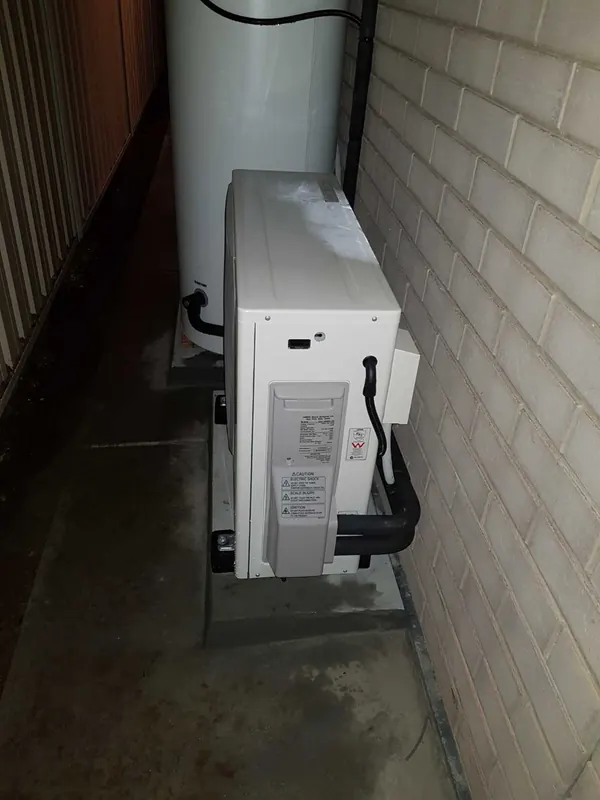
A heat pump works like a fridge in reverse. A fan draws outside air over a coil, a refrigerant soaks up the heat in that air, and a compressor moves the heat into the water in the tank. It doesn't make heat the way an electric element does, it moves heat that is already there. That is why a heat pump uses a fraction of the electricity of a conventional electric tank: the Australian Government's energy advice puts it at around a third.
Even cold air holds some heat, so the process keeps working on a frosty morning. What changes is the speed. With less warmth in the air, the heat pump runs longer to bring the tank up to temperature. On mild days most heat pumps heat a full tank from cold in about 3 to 6 hours; in the middle of a Hills winter some budget models take noticeably longer.
Why the Hills are different to the plains
Most of Adelaide is mild enough that almost any decent heat pump copes. The Adelaide Hills are cooler, with colder nights and more frosty mornings than the suburbs on the plains. The government's guidance is clear that not every heat pump is designed for places that are regularly below 5°C, so in Stirling, Aldgate, Mount Barker, Littlehampton, Hahndorf and nearby towns the choice of model matters more.
That doesn't mean the Hills need a different type of system. It means choosing a heat pump that is rated for cooler conditions, giving it enough tank size to ride through a cold morning, and setting it up so it does most of its work when the air is warmest.
CO₂ heat pumps and conventional heat pumps
Heat pumps use one of two kinds of refrigerant, and in a cold climate that is the biggest difference between models.
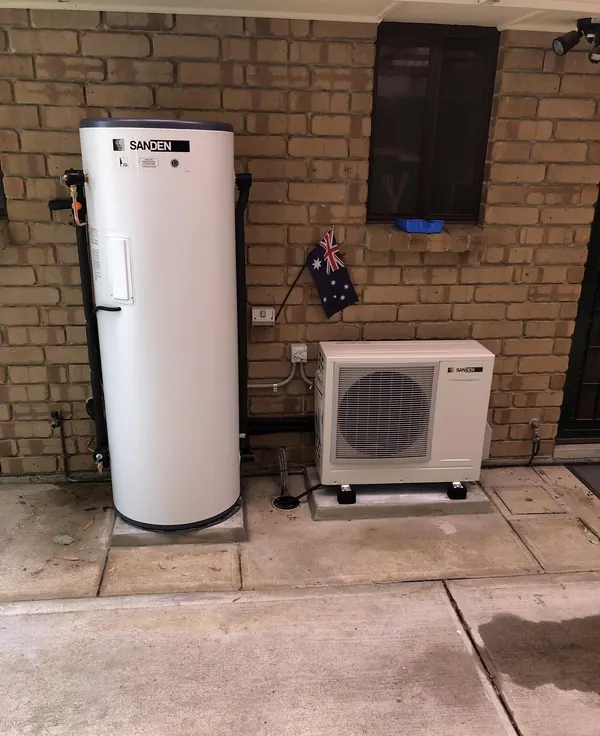
- CO₂ heat pumps (for example Sanden and Reclaim) use natural CO₂ (R744). They are the premium option and keep performing strongly in cold weather. Sanden is a split system, with a separate outdoor unit beside the tank.
- Conventional refrigerant heat pumps (for example Rheem and Midea) cost less to buy and give good value. Many are all-in-one units, with the compressor sitting on top of the tank. In a cold spot, check the model's operating range and expect slower heating in winter.
Either type can work in the Hills. If your home is in one of the colder pockets, or you want the shortest heating times on winter mornings, a CO₂ model is the one we usually point people towards. On the plains, a quality conventional heat pump is often all you need.
Five things that make a heat pump work better in winter
1. Run it in the middle of the day
The air is warmest in the middle of the day, so a heat pump that runs then does the same job with less effort. If you have rooftop solar panels, set the timer for peak solar, typically 10am to 3pm, and the heat pump runs mostly on your own power. Without solar, SA Power Networks' controlled load "solar sponge" window (9:30am to 4:30pm) is also in the middle of the day. Your retailer's times can differ, so check your bill.
2. Get the tank size right
A slightly bigger tank gives you a buffer when the heat pump is working slower. As a guide, 1 to 2 people need about 160 to 180 litres, 3 to 4 people about 250 to 280 litres, and 5 or more about 300 to 315 litres or larger. We also look at bathrooms and shower habits. Our sizing guide goes through it in more detail.
3. Put it where it gets air and sun
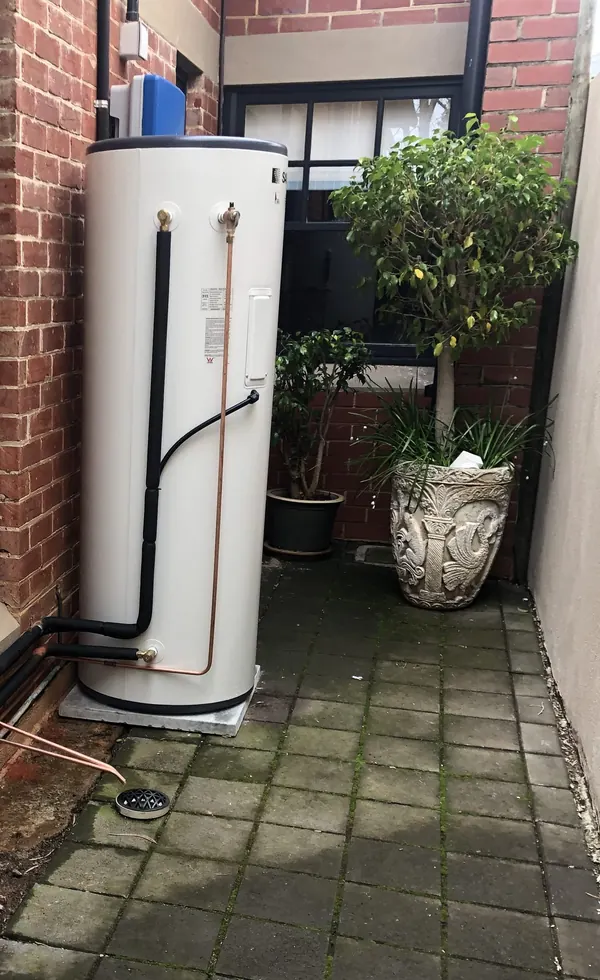
The unit needs room for air to flow in and out. A sheltered, sunny spot is better than a cramped, shaded corner where cold air pools. Keep it away from bedroom windows and the neighbours, because the fan and compressor make a hum similar to an air conditioner's outdoor unit.
4. Keep up the servicing
A heat pump with clean filters, clear airflow and working valves heats faster. Follow the maker's schedule, generally a routine inspection every 1 to 2 years.
5. Use the boost or holiday settings sensibly
Many heat pumps have a boost mode for a big day of visitors, and many now have an app that shows what the unit is doing. If you go away in winter, a holiday mode stops the system heating an empty house.
Signs your heat pump isn't coping
- You run out of hot water most winter mornings, not just after a big day.
- The unit seems to run almost all day and night in cooler weather.
- It is louder than it used to be, or shows a fault on the display or app.
- The water is only lukewarm even after it has had hours to heat.
These can be a wrong timer setting, a dirty filter, a failing part, or simply a system that is too small or not designed for your conditions. If it is under warranty, repairs are generally done through the manufacturer's authorised service network, and we can help you arrange that. Outside warranty, we diagnose it and tell you whether a repair or a better-suited heat pump makes more sense.
Switching to a heat pump in the Hills
Whether you have an electric tank, a gas storage tank or an old solar system now, a heat pump can usually go where the old system is, as long as there is space, airflow, drainage and a power supply. All-in-one or split, we look at the spot and recommend the best layout, reusing existing plumbing where practical. Eligible heat pumps also attract federal small-scale technology certificates (STCs), which reduce the price; we tell you which incentives apply when we quote. More on the rebates page.
We install and service heat pumps right across the Adelaide Hills and Mount Barker. See our heat pump range, or our guide to heat pump vs gas vs electric running costs.
Common questions
Do heat pump hot water systems work in winter?
Yes. Modern heat pumps keep making hot water through winter. In very cold weather they take longer to heat the tank, so choose a model suited to cooler conditions and size the tank to suit your household.
Which heat pump is best for the Adelaide Hills?
For the colder parts of the Hills we usually recommend a CO₂ heat pump such as Sanden or Reclaim, which perform very well in colder conditions. A quality conventional heat pump can still suit milder spots and smaller budgets.
How long does a heat pump take to heat in winter?
Most take about 3 to 6 hours to heat a full tank from cold, depending on the model, tank size and outdoor temperature. Some budget models take longer in winter, while premium systems heat faster.
When should my heat pump run?
In the middle of the day, when the air is warmest. With rooftop solar, set it for peak solar, typically 10am to 3pm, so it runs mostly on your own power.