If the pilot light on your gas storage hot water system keeps going out, relight it once by following the instructions printed on the unit, as long as you can't smell gas. If it goes out again, stop. A pilot that won't stay lit is usually a faulty thermocouple, a dirty pilot or a gas supply problem, and those are gas parts that only a licensed gas fitter should work on. Call us on (08) 8444 7311. If you smell gas, don't relight anything: turn the gas off at the meter if it is safe, leave the area and ring the gas emergency line.
First: do you smell gas?
If there is a smell of gas near the hot water system or anywhere in the house:
- Don't try to relight the pilot, and don't use light switches, phones or anything that could make a spark near the smell.
- Turn off the gas at the meter (or the bottles) if it is safe to do so, and open doors and windows.
- Move away, then call the 24 hour gas emergency line on 1800 427 532 for natural gas, or your gas supplier for LPG.
Our gas hot water safety page has more on gas smells, flue problems and when to call a gas fitter.
What the pilot light does
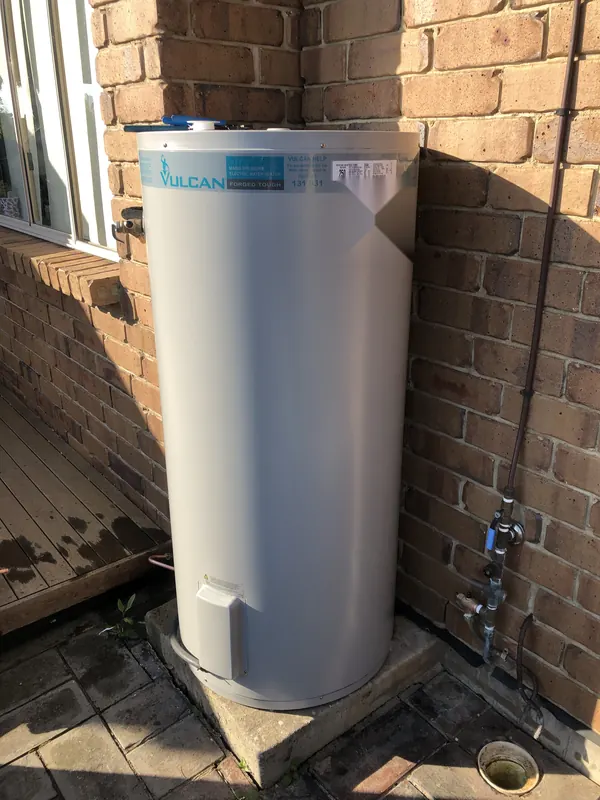
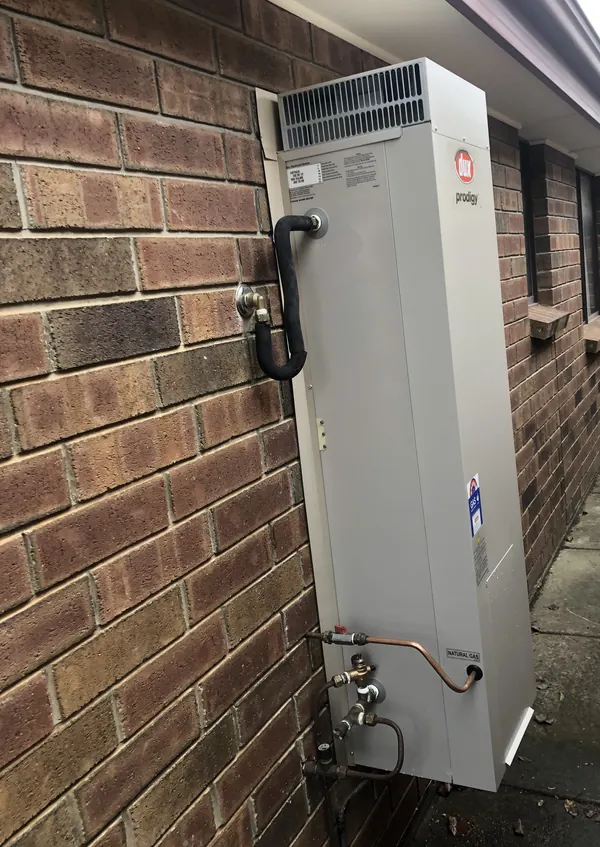
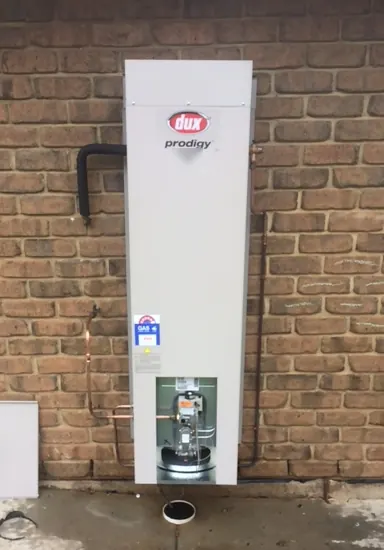
Many gas storage tanks, including plenty of older Dux, Rheem, Vulcan and AquaMAX models, have a small pilot flame that burns all the time near the bottom of the tank. When the thermostat calls for heat, the pilot lights the main burner. You can usually see the pilot through a small window near the base of the unit.
Beside the pilot sits a safety device called a thermocouple (or a similar flame sensor). While the pilot flame heats it, it holds the gas valve open. If the pilot goes out, it cools down and shuts the gas off, so unburnt gas can't build up. That is why a pilot that keeps going out is a safety system doing its job: something is stopping the flame staying stable, or the sensor itself has failed.
Gas continuous flow units and many newer storage models don't have a standing pilot. They use electronic ignition and show an error code instead. If that is what you have, see our trouble shooting page.
Common reasons a pilot won't stay lit
A worn or faulty thermocouple
The most common cause. A thermocouple wears out over the years, and once it can't sense the flame properly the pilot drops out a few seconds after you let go of the button, or a few hours later. Replacing it is a routine gas repair.
A dirty or partly blocked pilot
Dust, lint, spider webs and corrosion can make the pilot flame small, weak or yellow instead of a steady blue. A weak flame doesn't heat the thermocouple enough, so the gas valve closes. Cleaning and adjusting the pilot assembly is gas work for a licensed fitter.
A gas supply problem
Low gas pressure, an empty or nearly empty LPG bottle, a regulator problem or air in the line after gas work can all starve the pilot. If other gas appliances are playing up at the same time, the supply is a likely suspect. On bottled gas, check the bottle first.
Wind or draughts, and flue problems
Strong gusts can blow out a pilot on an outdoor unit, especially in an exposed spot. A blocked, damaged or poorly placed flue can also stop the burner getting enough air, or push combustion gases back towards the flame. Flue problems are a safety issue, so don't ignore soot marks, scorching or a smell of burning around the unit.
A failing gas control valve
On older tanks the gas control valve itself can fail. If the thermocouple and pilot check out but it still won't hold, the valve is next. On an older system this is often where repair and replacement costs start to look similar.
What you can safely do
- Check for a gas smell. If there is one, stop and follow the steps above.
- Check the gas is on at the meter or the bottles, and that other gas appliances work.
- Relight the pilot once, following the lighting label on the unit or the owner's manual. Many manuals are on our technical information page, including Dux manuals and AquaMAX manuals.
- If it won't light or goes out again, stop. Don't keep trying, and don't remove covers or adjust anything on the gas valve or burner.
- Take a photo of the sticker plate (brand, model and age) and call us. It helps us bring the right parts.
Gas work on a water heater must be done by a licensed gas fitter. In South Australia it is against the law to do it yourself, and it can void the warranty.
Repair or replace?
A thermocouple or pilot repair on a tank in good condition is usually worth doing. It is a different story when the tank is old. Most gas hot water systems last about 10 to 15 years. If yours is near that age, has rust around the base, is leaking, or has needed several repairs, replacing it may cost less in the long run. On some older models parts are no longer available at all.
If you do replace it, South Australia's rules generally mean a home on mains gas needs a 5 star gas system or another low emission type, such as a heat pump or solar. We check what applies to your home before we quote. If you decide on a new system after our visit, the service fee comes off the price. For the options, see our gas hot water range and how long a hot water system lasts.
Gas hot water repairs across Adelaide
We repair gas hot water systems Monday to Friday right across Adelaide, from Paralowie and Parafield Gardens in the north to Morphett Vale and Hallett Cove in the south. Call before 9am and same day is most likely. See our hot water repairs page, or our 8 quick checks for no hot water.
Common questions
Why does my hot water pilot light keep going out?
Usually a faulty thermocouple, a dirty or partly blocked pilot, or a gas supply problem. Wind, a flue problem or a failing gas valve can also cause it.
Can I relight the pilot light myself?
Yes, once, by following the lighting instructions on the unit or in the owner's manual, and only if you can't smell gas. If it won't light or goes out again, stop and call a licensed gas fitter.
What should I do if I smell gas near my hot water system?
Don't relight anything or use switches near the smell. Turn off the gas at the meter if it is safe, open doors and windows, move away and call the gas emergency line on 1800 427 532 (natural gas) or your LPG supplier.
Is it worth repairing an old gas hot water system?
A pilot or thermocouple repair on a tank in good condition usually is. If the system is near 10 to 15 years old, rusting, leaking or needing repeated repairs, replacing it may be better value.